


The Annuity Product RIAs Can No Longer Afford to Ignore
The annuity market has been on an extraordinary run. Industry data shows that U.S. retail annuity sales have now exceeded $115 billion for eight consecutive quarters, with the overall market surpassing $450 billion in annual sales for a fourth straight year. However, within that broader surge, one product category stands out above the rest: registered index-linked annuities, commonly referred to as RILAs.
For registered investment advisors navigating an environment defined by market uncertainty, shifting interest rate expectations, and clients seeking both growth potential and downside protection, RILAs represent a compelling planning tool that warrants a closer examination. Here's why 2026 may be the year to integrate them into your practice — and how commission-free versions are making that easier than ever for fiduciary advisors.
What Are RILAs and Why Are They Growing So Fast?
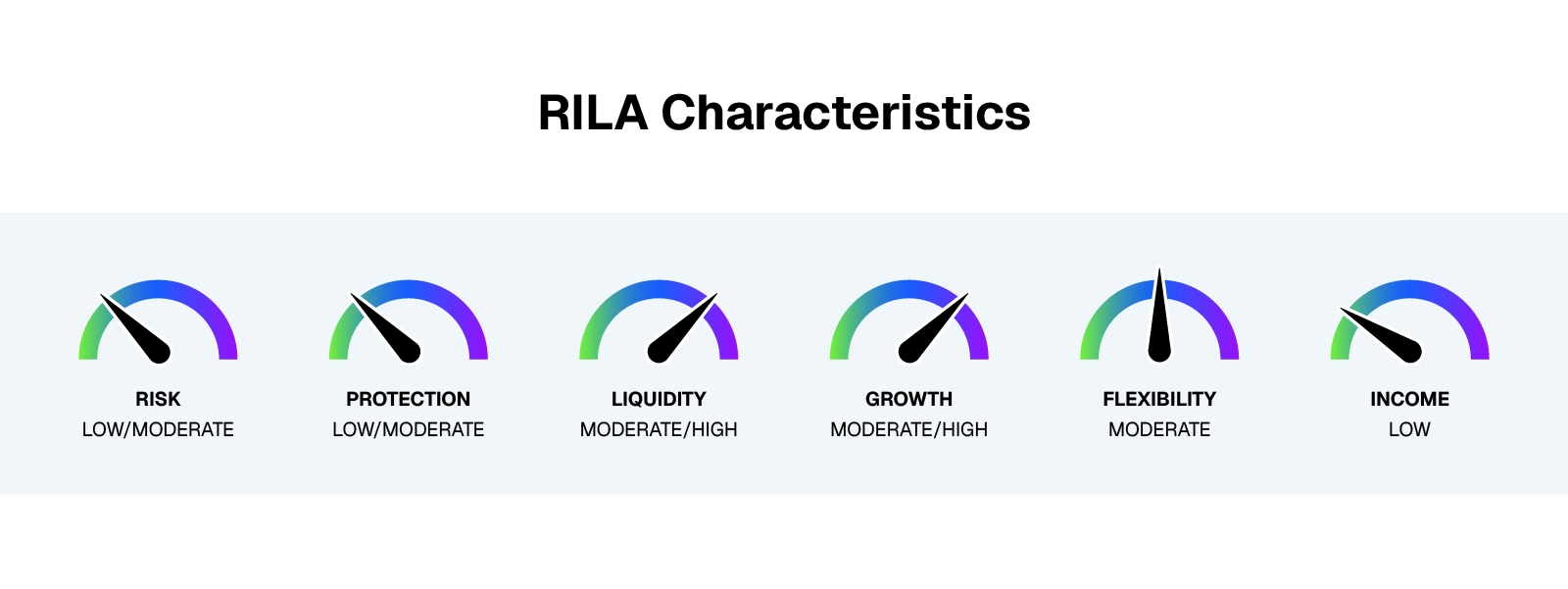
RILAs — sometimes called structured or buffered annuities — occupy a unique space in the annuity landscape. They offer participation in market index performance with built-in mechanisms to limit downside exposure. Unlike traditional fixed annuities, which provide a guaranteed rate but no market upside, or variable annuities, which offer full market participation but with full downside risk, RILAs offer a middle ground that many investors find appealing.
Here is how they generally work: the insurance carrier provides a buffer or floor that absorbs a specified percentage of index losses — for example, the first 10% or 20% of decline — while allowing the contract holder to participate in positive index returns up to a cap or at a participation rate. The result is a product that lets clients stay connected to market growth while providing meaningful protection during downturns.
The growth trajectory has been remarkable. RILA sales surged more than 270% between 2020 and 2024, climbing from roughly $24 billion to over $65 billion annually. Industry forecasts project sales will exceed $75 billion in both 2025 and 2026, making RILAs one of the fastest-growing segments in the entire insurance and retirement planning industry.
Why the Surge? A Perfect Storm of Demand Drivers
Several converging factors are fueling RILA adoption among both advisors and their clients.
1. The Peak 65 Retirement Wave
We are in the midst of what demographers call Peak 65 — a period where more than four million Americans are turning 65 each year. Many of these new retirees lack access to a traditional pension, leaving them without a guaranteed source of lifetime income. This creates an enormous demand for products that can provide a degree of certainty and protection without requiring clients to abandon market participation entirely.
For these clients, a RILA can serve as a bridge between the growth they need to fund a potentially 30-year retirement and the protection they want during the critical early years when sequence of returns risk is highest.
2. Market Volatility and Economic Uncertainty
The economic landscape heading into 2026 is anything but settled. Trade policy uncertainty, shifting Federal Reserve rate expectations, and geopolitical tensions are contributing to a market environment where clients are increasingly anxious about downside risk. Research indicates that by late 2025, nearly six in ten consumers expressed serious concern about the economy — a significant jump in just a few months.
RILAs are particularly well-suited for this environment because they address the core emotional tension many clients feel: they want to stay invested in the market for long-term growth, but they also want meaningful protection if things go wrong. The buffer mechanism inherent in RILA design directly addresses this concern in a way that traditional bonds or cash positions cannot.
3. A Shift From Rate Plays to Market Protection
For several years, rising interest rates made fixed-rate products like multi-year guaranteed annuities (MYGAs) exceptionally attractive. But as the Federal Reserve signals gradual rate cuts, the yield advantage of fixed products is expected to moderate. This is creating a natural rotation toward indexed-based products — particularly RILAs and fixed indexed annuities (FIAs) — that offer growth potential linked to market performance rather than relying solely on fixed rates.
Industry analysts note that the story heading into 2026 is no longer about chasing yield. Clients increasingly want growth with protection, and that pivot is reshaping which annuity products rise to the top. RILAs are perfectly positioned for this shift.
How RILAs Fit Into a Fee-Based Advisory Practice
Historically, one of the biggest barriers to annuity adoption among RIAs was the commission-based compensation model. Commissioned annuities were fundamentally incompatible with the fee-only and fee-based advisory models that most RIAs operate under. The products were expensive, opaque, and carried compensation structures that created real or perceived conflicts of interest.
That landscape has changed dramatically. Today, a growing number of insurance carriers offer fee-based versions of their RILA products, designed specifically for the RIA channel. These commission-free products eliminate the compensation conflicts that once made annuities a non-starter for fiduciary advisors. Without embedded commissions, fee-based RILAs typically offer more competitive pricing, better accumulation potential, and greater transparency — all qualities that align with the fiduciary model.
Fee-based annuity sales have doubled since 2020, and the trend shows no signs of slowing. As more RIAs integrate annuities into holistic planning conversations, this channel is poised for continued expansion. The combination of innovative product design and improved technology platforms is removing the friction that once made annuity implementation cumbersome and time-consuming for advisory firms.
Where RILAs Fit in the Portfolio
One of the most common questions advisors have when considering RILAs is where they fit within the broader portfolio allocation. The answer lies in understanding what role the product is designed to play.
For many planning scenarios, a RILA is best positioned as a replacement for a portion of the fixed income allocation, not equities. The logic is straightforward: if a client's primary goal is to generate retirement income while managing downside risk, a RILA can potentially deliver better outcomes than a traditional bond portfolio, which offers limited upside and carries its own set of risks, including interest rate sensitivity and credit risk.
Consider a hypothetical scenario: a traditional bond portfolio yielding 4.5% might require more than $1 million to fund a $5,000 per month income need over a 30-year retirement. A properly structured annuity solution could potentially meet that same income need with a significantly lower initial investment, freeing the remaining assets for long-term growth, tax planning, or legacy goals. This capital efficiency is one of the most powerful arguments for incorporating annuities — including RILAs — into the retirement plan.
Additionally, RILAs can play a valuable role in accumulation-focused strategies for clients who are still five to ten years from retirement. The buffer protection gives these clients confidence to stay invested through market turbulence during the critical final years of their accumulation phase, when a significant downturn could otherwise derail their retirement timeline.
The Behavioral Advantage: Why Clients With RILAs Stay the Course
Beyond the pure financial mechanics, there is a powerful behavioral dimension to RILA adoption that advisors should not overlook. Advisors who have incorporated annuities with downside protection into client portfolios consistently report that these clients exhibit different — and healthier — financial behaviors.
Specifically, clients with protected income or buffer-based products tend to contact their advisor less frequently during periods of market stress, spend more confidently in retirement knowing they have a safety net, and are more likely to stay committed to their long-term financial plan rather than making fear-driven decisions during downturns. These clients are also more likely to refer friends and family to their advisor, which translates directly into organic growth for the advisory practice.
In an industry where client retention and referral generation are critical growth levers, the behavioral benefits of RILAs can be just as valuable as the financial benefits they provide.
Overcoming the Legacy Perception
Despite the evolution of annuity products, many RIAs still carry a legacy perception that prevents them from considering these solutions. The resistance typically does not stem from the facts about modern annuities but rather from outdated experiences with the commission-driven products of decades past. Common objections include that annuities are too complex, too expensive, or unnecessary for their clients.
The reality is that modern, commission-free annuities are fundamentally different products from those that earned the category its negative reputation. When commissions are removed from the equation, cost structures can drop dramatically. The products become transparent, flexible, and fully compatible with fiduciary advice.
Many advisory firms are surprised to discover that a significant percentage of their existing client households — often between 25% and 40% — already hold annuity contracts purchased years earlier through other channels. These legacy contracts frequently underperform compared to modern alternatives and represent an immediate opportunity for advisors to add value through review, optimization, or exchange into better-suited products.
Technology Is Removing the Friction
Another factor accelerating RILA adoption among RIAs is the rapid improvement in technology platforms that support annuity discovery, fulfillment, and management. Modern platforms now integrate directly with the leading wealth management technology stacks — including portfolio management systems, reporting tools, and billing platforms — so that annuities appear alongside ETFs, mutual funds, and other assets on a single client dashboard.
This integration matters because it eliminates the operational headaches that previously made annuity implementation a manual, time-consuming process. Advisors can now discover suitable products, generate proposals, complete applications, and manage contracts within the same workflow they use for the rest of their clients' portfolios. Advisor fees can be billed cleanly on annuity assets, just as they are on any other managed account.
Artificial intelligence is also beginning to play a role behind the scenes, streamlining processes like form completion, underwriting, and compliance review. While AI is not replacing the advisor-client relationship — annuities remain a relationship-driven business — it is freeing advisors from administrative burden so they can focus on what matters most: understanding their clients' goals and building plans that achieve them.
Getting Started: A Practical Framework
For advisors who are ready to explore RILAs and other modern annuity solutions, the path forward does not have to begin with a product pitch to clients. A more effective approach starts with education and evaluation.
First, assess your current client base. How many of your households already hold annuities? Are those contracts optimized, or could clients benefit from a review? Understanding your existing annuity exposure can reveal immediate opportunities to add value and generate fee-based revenue through transitions and exchanges.
Second, familiarize yourself with the current product landscape. RILAs come in a wide variety of structures with different buffer levels, cap rates, participation rates, and index options. Working with a platform that offers side-by-side product comparisons can help you quickly identify which solutions are best suited for each client's risk tolerance and income objectives.
Third, integrate annuities into your planning conversations naturally. Rather than leading with the product, lead with the client's goal. If a client expresses concern about outliving their savings or worries about market downturns disrupting their retirement timeline, those are natural entry points for a conversation about how a RILA might fit into their broader plan.
Finally, use financial planning software to model the plan with and without an annuity component. Showing clients a side-by-side comparison of projected outcomes is one of the most effective ways to demonstrate the potential impact and help them make an informed decision.
The Bottom Line for RIAs
The annuity landscape in 2026 is fundamentally different from what it was even five years ago. RILAs have emerged as a powerful, fast-growing product category that addresses the precise concerns clients are expressing right now: they want to stay invested for growth but need protection against significant losses. Fee-based, commission-free versions of these products have removed the fiduciary barriers that once kept RIAs on the sidelines.
With record-breaking annuity sales, a massive retirement wave, and improving technology making implementation easier every day, the question is no longer whether RIAs should incorporate annuities into their practices. The question is whether advisors who continue to sit on the sidelines risk falling behind those who are already delivering more comprehensive, more protective, and more competitive financial plans to their clients.
The opportunity is here. The tools are ready. And for the advisors who act, the potential to improve client outcomes, deepen relationships, and grow their practices has never been greater.
Disclosures:
This material is for informational purposes only and is not a recommendation to buy or sell a financial product or to adopt an investment strategy. Investors should discuss their specific situation with their financial professional.
Guarantees are based on the claims-paying ability of the insurance carrier issuing the product.
• Not a deposit • Not FDIC or NCUSIF insured • Not guaranteed by the institution • Not insured by any federal government agency • May lose value
When evaluating the purchase of a variable annuity or registered index-linked annuity, you should be aware that these are long-term investment vehicles designed for retirement purposes and will fluctuate in value. Annuities have limitations, and investing involves market risk, including possible loss of principal.
The general distributor for variable products is Johnstone Brokerage Services (JBS), a member of FINRA/SIPC, 117 San Augustine Street, Center, TX 75935. JBS is wholly owned by DPL Financial Partners.
© 2026 DPL Financial Partners, LLC. All rights reserved.